from my 1st Ebert’s Great Movies Marathon, part 13 of 13
2001: A Space Odyssey, 1968... I've got nothing new to add to my earlier post: linkity link.
Showing posts with label first ebert marathon. Show all posts
Showing posts with label first ebert marathon. Show all posts
December 28, 2011

December 27, 2011
(The Godfather)
from my 1st Ebert’s Great Movies Marathon, part 12 of 13
The Godfather, 1972. ...I don't really have anything new to add to my post on this from about a year ago, so here's a link to that.
The Godfather, 1972. ...I don't really have anything new to add to my post on this from about a year ago, so here's a link to that.
December 24, 2011
The Passion of Joan of Arc
from my 1st Ebert’s Great Movies Marathon, part 11 of 13

La passion de Jeanne d'Arc, 1928. The heresy trial of Joan of Arc. Directed by Carl Theodor Dreyer. Written by Dreyer & Joseph Delteil. Starring Maria Falconetti.
Concept: 3/4 (Good)
Story: 4/4 (Great). Although a detailed plot synopsis would sound like an unremarkable historical drama, the execution of the writing is absolutely perfect.
Characters: 4/4 (Great)
Dialog: 4/4 (Great). It's taken from the transcripts of the actual trial. I never expected to see this level of realism in the dialog of a movie earlier than the 50s, much less in a silent.
Pacing: 4/4 (Great)
Cinematography: 4/4 (Great)
Special effects/design: 4/4 (Great)
Acting: 4/4 (Great). One of the greatest performances, ever.
Music: 4/4 (Great)
Subjective Rating: 9/10 (One of my favorites,4/4 5/4). Emotionally powerful, intellectually fascinating, visually striking, and entirely unique.
Objective Rating (Average):3.9/4 4.0/4 (Great)

La passion de Jeanne d'Arc, 1928. The heresy trial of Joan of Arc. Directed by Carl Theodor Dreyer. Written by Dreyer & Joseph Delteil. Starring Maria Falconetti.
Concept: 3/4 (Good)
Story: 4/4 (Great). Although a detailed plot synopsis would sound like an unremarkable historical drama, the execution of the writing is absolutely perfect.
Characters: 4/4 (Great)
Dialog: 4/4 (Great). It's taken from the transcripts of the actual trial. I never expected to see this level of realism in the dialog of a movie earlier than the 50s, much less in a silent.
Pacing: 4/4 (Great)
Cinematography: 4/4 (Great)
Special effects/design: 4/4 (Great)
Acting: 4/4 (Great). One of the greatest performances, ever.
Music: 4/4 (Great)
Subjective Rating: 9/10 (One of my favorites,
Objective Rating (Average):
December 23, 2011
L'Avventura
from my 1st Ebert’s Great Movies Marathon, part 10 of 13

L'Avventura, 1960. A man and a woman don't find their missing friend. Directed by Michelangelo Antonioni. Written by Antonioni, Elio Bartolini & Tonino Guerra. Starring Gabriele Ferzetti & Monica Vitti.
Concept: 0/4 (Terrible)
Story: 0/4 (Terrible). The epitome of narrative vacuum.
Characters: 1/4 (Bad)
Dialog: 2/4 (Indifferent)
Pacing: 0/4 (Terrible). Not that it could have been improved - the sadistically slow pace is necessary to convince you that he meant to do this.
Cinematography: 4/4 (Great)
Special effects/design: 3/4 (Good)
Acting: 2/4 (Indifferent). I don't even know.
Music: 2/4 (Indifferent). It's good when it's there. It's usually conspicuously absent.
Subjective Rating: 1/10 (Eew get it away, 0/4). It's like watching paint dry. Completely, utterly awful. My wife says, "The word you're looking for is inane. Inane."
Objective Rating (Average): 1.4/4 (Bad)

L'Avventura, 1960. A man and a woman don't find their missing friend. Directed by Michelangelo Antonioni. Written by Antonioni, Elio Bartolini & Tonino Guerra. Starring Gabriele Ferzetti & Monica Vitti.
Concept: 0/4 (Terrible)
Story: 0/4 (Terrible). The epitome of narrative vacuum.
Characters: 1/4 (Bad)
Dialog: 2/4 (Indifferent)
Pacing: 0/4 (Terrible). Not that it could have been improved - the sadistically slow pace is necessary to convince you that he meant to do this.
Cinematography: 4/4 (Great)
Special effects/design: 3/4 (Good)
Acting: 2/4 (Indifferent). I don't even know.
Music: 2/4 (Indifferent). It's good when it's there. It's usually conspicuously absent.
Subjective Rating: 1/10 (Eew get it away, 0/4). It's like watching paint dry. Completely, utterly awful. My wife says, "The word you're looking for is inane. Inane."
Objective Rating (Average): 1.4/4 (Bad)
December 20, 2011
La Dolce Vita
from my 1st Ebert’s Great Movies Marathon, part 9 of 13

La Dolce Vita, 1960. A jackass is a jackass. Directed by Federico Fellini. Written by Fellini, Ennio Flaiano & Tullio Pinelli, with Brunello Rondi. Starring Marcello Mastroianni, Anita Ekberg, Anouk Aimée & Yvonne Furneaux.
Concept: 0/4 (Terrible)
Story: 0/4 (Terrible). No story. No dramatic tension of any kind.
Characters: 2/4 (Indifferent). I'm torn here. They're very well developed characters. I mean, the movie does nothing but develop the protagonist for three hours. But he's so completely unlikable and unrelatable, I can't bring myself to call him a good character. Presumably this attitude toward him is my fault, not the movie's; so many people love this movie, they must be relating to him at least a little. I find that thought depressing.
Dialog: 2/4 (Indifferent)
Pacing: 1/4 (Bad)
Cinematography: 3/4 (Good)
Special effects/design: 4/4 (Great)
Acting: 3/4 (Good)
Music: 3/4 (Good)
Subjective Rating: 3/10 (Bad, 1/4). It's the sort of movie that gets heavily analyzed because the audience has Nothing Else To Do for 3 hours.
Objective Rating (Average): 1.9/4 (Eh)
(update of a previous post - original is here)

La Dolce Vita, 1960. A jackass is a jackass. Directed by Federico Fellini. Written by Fellini, Ennio Flaiano & Tullio Pinelli, with Brunello Rondi. Starring Marcello Mastroianni, Anita Ekberg, Anouk Aimée & Yvonne Furneaux.
Concept: 0/4 (Terrible)
Story: 0/4 (Terrible). No story. No dramatic tension of any kind.
Characters: 2/4 (Indifferent). I'm torn here. They're very well developed characters. I mean, the movie does nothing but develop the protagonist for three hours. But he's so completely unlikable and unrelatable, I can't bring myself to call him a good character. Presumably this attitude toward him is my fault, not the movie's; so many people love this movie, they must be relating to him at least a little. I find that thought depressing.
Dialog: 2/4 (Indifferent)
Pacing: 1/4 (Bad)
Cinematography: 3/4 (Good)
Special effects/design: 4/4 (Great)
Acting: 3/4 (Good)
Music: 3/4 (Good)
Subjective Rating: 3/10 (Bad, 1/4). It's the sort of movie that gets heavily analyzed because the audience has Nothing Else To Do for 3 hours.
Objective Rating (Average): 1.9/4 (Eh)
(update of a previous post - original is here)
December 13, 2011
The Wizard of Oz
from my 1st Ebert’s Great Movies Marathon, part 8 of 13

The Wizard of Oz, 1939. A witch and a lost girl fight to the death over a sparkly pair of heels. Directed by Victor Fleming. Written by Noel Langley, Florence Ryerson & Edgar Allan Woolf, based on a book by L. Frank Baum. Starring Judy Garland, Frank Morgan, Ray Bolger, Bert Lahr, Jack Haley & Margaret Hamilton.
Concept: 4/4 (Great)
Story: 3/4 (Good)
Characters: 4/4 (Great)
Dialog: 3/4 (Good)
Pacing: 4/4 (Great)
Cinematography: 3/4 (Good)
Special effects/design: 4/4 (Great)
Acting: 3/4 (Good). Garland is great. The rest are entertainingly hammy.
Music: 4/4 (Great)
Subjective Rating: 8/10 (Great, 4/4). Whenever I watch this, I try to imagine what it would be like to see it for the first time. I can never tell, but I do usually notice things that have previously been invisibile-due-to-familiarity. One thing I managed to pull out of it this time around was just how good a song and performance "Over the Rainbow" is. I mean, yeah, I've always known it's great, but this time it struck me how much it probably would have floored me if I'd never heard it before.
Objective Rating (Average): 3.6/4 (Great)
(update of a previous post - original is here)

The Wizard of Oz, 1939. A witch and a lost girl fight to the death over a sparkly pair of heels. Directed by Victor Fleming. Written by Noel Langley, Florence Ryerson & Edgar Allan Woolf, based on a book by L. Frank Baum. Starring Judy Garland, Frank Morgan, Ray Bolger, Bert Lahr, Jack Haley & Margaret Hamilton.
Concept: 4/4 (Great)
Story: 3/4 (Good)
Characters: 4/4 (Great)
Dialog: 3/4 (Good)
Pacing: 4/4 (Great)
Cinematography: 3/4 (Good)
Special effects/design: 4/4 (Great)
Acting: 3/4 (Good). Garland is great. The rest are entertainingly hammy.
Music: 4/4 (Great)
Subjective Rating: 8/10 (Great, 4/4). Whenever I watch this, I try to imagine what it would be like to see it for the first time. I can never tell, but I do usually notice things that have previously been invisibile-due-to-familiarity. One thing I managed to pull out of it this time around was just how good a song and performance "Over the Rainbow" is. I mean, yeah, I've always known it's great, but this time it struck me how much it probably would have floored me if I'd never heard it before.
Objective Rating (Average): 3.6/4 (Great)
(update of a previous post - original is here)
December 7, 2011
The Third Man
from my 1st Ebert’s Great Movies Marathon, part 7 of 13

The Third Man, 1949. An American in post-war Vienna tries to clear the name of his recently deceased friend. Directed by Carol Reed. Written by Graham Greene. Starring Joseph Cotten, Alida Valli, Orson Welles & Trevor Howard.
Concept: 3/4 (Good)
Story: 3/4 (Good)
Characters: 4/4 (Great)
Dialog: 4/4 (Great)
Pacing: 4/4 (Great)
Cinematography: 4/4 (Great). Visually, this movie is as good as it gets.
Special effects/design: 4/4 (Great). Bombs are a great set designer.
Acting: 4/4 (Great). Oh man, Welles' grin alone could earn this movie a 4. It's surely one of the Top Ten Moments of Acting.
Music: 4/4 (Great). It's my second time watching the movie, and I've had a complete reversal on my reaction to the music. It had seemed so completely wrong for the movie. It is wrong for the first half of the movie, and by the time it starts to fit, I had already rejected it. But on the second viewing, the effect has changed so much it's like a different score. Watching that first half of the movie knowing that the title character is on his way - knowing the character and how Welles plays him - the score is absolutely perfect. It's hard to imagine the movie with a traditional mystery/crime score. It would still be a great movie that way, but... I don't know. Maybe Welles' performance wouldn't seem so great without that music to prepare you for him.
Subjective Rating: 8/10 (Great, 4/4). An all-around damn good movie.
Objective Rating (Average): 3.8/4 (Great)
(update of a previous post - original is here)

The Third Man, 1949. An American in post-war Vienna tries to clear the name of his recently deceased friend. Directed by Carol Reed. Written by Graham Greene. Starring Joseph Cotten, Alida Valli, Orson Welles & Trevor Howard.
Concept: 3/4 (Good)
Story: 3/4 (Good)
Characters: 4/4 (Great)
Dialog: 4/4 (Great)
Pacing: 4/4 (Great)
Cinematography: 4/4 (Great). Visually, this movie is as good as it gets.
Special effects/design: 4/4 (Great). Bombs are a great set designer.
Acting: 4/4 (Great). Oh man, Welles' grin alone could earn this movie a 4. It's surely one of the Top Ten Moments of Acting.
Music: 4/4 (Great). It's my second time watching the movie, and I've had a complete reversal on my reaction to the music. It had seemed so completely wrong for the movie. It is wrong for the first half of the movie, and by the time it starts to fit, I had already rejected it. But on the second viewing, the effect has changed so much it's like a different score. Watching that first half of the movie knowing that the title character is on his way - knowing the character and how Welles plays him - the score is absolutely perfect. It's hard to imagine the movie with a traditional mystery/crime score. It would still be a great movie that way, but... I don't know. Maybe Welles' performance wouldn't seem so great without that music to prepare you for him.
Subjective Rating: 8/10 (Great, 4/4). An all-around damn good movie.
Objective Rating (Average): 3.8/4 (Great)
(update of a previous post - original is here)
The Night of the Hunter
from my 1st Ebert’s Great Movies Marathon, part 6 of 13

The Night of the Hunter, 1955. A mad "preacher" is after money that two kids have hidden. Directed by Charles Laughton. Written by James Agee, based on a novel by Davis Grubb. Starring Robert Mitchum, Shelley Winters, Lillian Gish, Billy Chapin & Sally Jane Bruce.
Concept: 3/4 (Good)
Story: 4/4 (Great)
Characters: 4/4 (Great)
Dialog: 4/4 (Great)
Pacing: 3/4 (Good)
Cinematography: 4/4 (Great)
Special effects/design: 4/4 (Great)
Acting: 3/4 (Good)
Music: 4/4 (Great)
Subjective Rating: 8/10 (Great, 4/4). Powerfully suspenseful and visually beautiful. Mitchum's preacher is one of the scariest movie characters of all time. It's a strange movie, combining expressionist horror and noir crime thiller - taking the best from both worlds without much regard for the audience's expectations. I appreciated and enjoyed it a lot more the second time around.
Objective Rating (Average): 3.7/4 (Great)

The Night of the Hunter, 1955. A mad "preacher" is after money that two kids have hidden. Directed by Charles Laughton. Written by James Agee, based on a novel by Davis Grubb. Starring Robert Mitchum, Shelley Winters, Lillian Gish, Billy Chapin & Sally Jane Bruce.
Concept: 3/4 (Good)
Story: 4/4 (Great)
Characters: 4/4 (Great)
Dialog: 4/4 (Great)
Pacing: 3/4 (Good)
Cinematography: 4/4 (Great)
Special effects/design: 4/4 (Great)
Acting: 3/4 (Good)
Music: 4/4 (Great)
Subjective Rating: 8/10 (Great, 4/4). Powerfully suspenseful and visually beautiful. Mitchum's preacher is one of the scariest movie characters of all time. It's a strange movie, combining expressionist horror and noir crime thiller - taking the best from both worlds without much regard for the audience's expectations. I appreciated and enjoyed it a lot more the second time around.
Objective Rating (Average): 3.7/4 (Great)
(update of a previous post - original is here)
December 1, 2011
Mr. Hulot's Holiday
from my 1st Ebert’s Great Movies Marathon, part 5 of 13

Les vacances de Monsieur Hulot, 1953. A nice man vacations by the sea. Directed by and starring Jacques Tati. Written by Jacques Tati, Pierre Aubert, Jacques Lagrange & Henri Marquet.
Concept: 4/4 (Great). A silent film in the 50s? With a lovable protagonist? Perfect.
Story: 1/4 (Bad). No story - doesn't need one.
Characters: 4/4 (Great)
Dialog: 3/4 (Good). There's very little, but it's too much.
Pacing: 3/4 (Good)
Cinematography: 2/4 (Indifferent)
Special effects/design: 3/4 (Good)
Acting: 4/4 (Great). Really, the acting's good, not great. But I have to give full points for Tati's performance.
Music: 3/4 (Good). It should be annoying how often the same song is repeated, but it works.
Subjective Rating: 7/10 (Good, 3/4). It's only occasionally funny (although when it is funny, it can be hilarious); mostly it's just slow and peaceful. I don't like it nearly as much as I expected to, but Hulot's too great a character to not like it.
Objective Rating (Average): 3.0/4 (Good)

Les vacances de Monsieur Hulot, 1953. A nice man vacations by the sea. Directed by and starring Jacques Tati. Written by Jacques Tati, Pierre Aubert, Jacques Lagrange & Henri Marquet.
Concept: 4/4 (Great). A silent film in the 50s? With a lovable protagonist? Perfect.
Story: 1/4 (Bad). No story - doesn't need one.
Characters: 4/4 (Great)
Dialog: 3/4 (Good). There's very little, but it's too much.
Pacing: 3/4 (Good)
Cinematography: 2/4 (Indifferent)
Special effects/design: 3/4 (Good)
Acting: 4/4 (Great). Really, the acting's good, not great. But I have to give full points for Tati's performance.
Music: 3/4 (Good). It should be annoying how often the same song is repeated, but it works.
Subjective Rating: 7/10 (Good, 3/4). It's only occasionally funny (although when it is funny, it can be hilarious); mostly it's just slow and peaceful. I don't like it nearly as much as I expected to, but Hulot's too great a character to not like it.
Objective Rating (Average): 3.0/4 (Good)
October 24, 2011
A Hard Day's Night
from my 1st Ebert’s Great Movies Marathon, part 4 of 13

Data
Title: A Hard Day's Night
Year: 1964
Length: 87 minutes
Director: Richard Lester
Writer: Alun Owen
Starring: John Lennon, Paul McCartney, George Harrison, Ringo Starr
With: Wilfrid Brambell, Norman Rossington, John Junkin, Victor Spinetti
Music: John Lennon & Paul McCartney (songs); George Martin (musical director)
Cinematography: Gilbert Taylor
Editing: John Jympson
Oscars: nominated for Best Original Screenplay and Best Adapted Score
I saw it: on video (rented from Netflix), a few days ago
Synopsis: a day in the life of the Beatles
My reaction
Concept: 1/4 (Bad). Never has my love for a band made me think, "Gee, this music's fine, but why aren't they starring in their own movies?"
Story: 1/4 (Bad). No story. It would have been difficult to come up with a story that works at all, though, so it's probably best that there's no story.
Characters: 3/4 (Good)
Dialog: 3/4 (Good)
Pacing: 3/4 (Good)
Cinematography: 4/4 (Great). There's a remarkable amount of texture in the photography. Thanks to that and the faux-documentary style, no matter how dumb the movie gets, there's always something interesting to look at.
Special effects/design: 4/4 (Great). It's very easy to overlook this aspect, having grown up long after this movie's time. Everything is so damn iconic that I couldn't help taking it all for granted while I was watching it.
Acting: 2/4 (Indifferent)
Music: 4/4 (Great)
Subjective Rating: 6/10 (Okay, 2/4). A Marx Brothers movie, minus the wit (not that there's no wit - just relative to a Marx Brothers movie), crossed with a concert film, shot like an art film. I was only vaguely entertained while watching it, but after some reflection, there really is a lot to appreciate about it.
Objective Rating (Average): 2.7/4 (Good)

Data
Title: A Hard Day's Night
Year: 1964
Length: 87 minutes
Director: Richard Lester
Writer: Alun Owen
Starring: John Lennon, Paul McCartney, George Harrison, Ringo Starr
With: Wilfrid Brambell, Norman Rossington, John Junkin, Victor Spinetti
Music: John Lennon & Paul McCartney (songs); George Martin (musical director)
Cinematography: Gilbert Taylor
Editing: John Jympson
Oscars: nominated for Best Original Screenplay and Best Adapted Score
I saw it: on video (rented from Netflix), a few days ago
Synopsis: a day in the life of the Beatles
My reaction
Concept: 1/4 (Bad). Never has my love for a band made me think, "Gee, this music's fine, but why aren't they starring in their own movies?"
Story: 1/4 (Bad). No story. It would have been difficult to come up with a story that works at all, though, so it's probably best that there's no story.
Characters: 3/4 (Good)
Dialog: 3/4 (Good)
Pacing: 3/4 (Good)
Cinematography: 4/4 (Great). There's a remarkable amount of texture in the photography. Thanks to that and the faux-documentary style, no matter how dumb the movie gets, there's always something interesting to look at.
Special effects/design: 4/4 (Great). It's very easy to overlook this aspect, having grown up long after this movie's time. Everything is so damn iconic that I couldn't help taking it all for granted while I was watching it.
Acting: 2/4 (Indifferent)
Music: 4/4 (Great)
Subjective Rating: 6/10 (Okay, 2/4). A Marx Brothers movie, minus the wit (not that there's no wit - just relative to a Marx Brothers movie), crossed with a concert film, shot like an art film. I was only vaguely entertained while watching it, but after some reflection, there really is a lot to appreciate about it.
Objective Rating (Average): 2.7/4 (Good)
October 5, 2011
Vertigo
from my 1st Ebert’s Great Movies Marathon, part 3 of 13

Data
Title: Vertigo
Year: 1958
Length: 129 minutes
Director: Alfred Hitchcock
Writers: Alec Coppel & Samuel A. Taylor, based on a novel by Pierre Boileau & Thomas Narcejac
Starring: James Stewart, Kim Novak
With: Barbara Bel Geddes, Tom Helmore, Henry Jones, Raymond Bailey, Ellen Corby, Konstantin Shayne, Lee Patrick
Music: Bernard Herrmann
Cinematography: Robert Burks
Editing: George Tomasini
Oscars: nominated for Best Art Direction/Set Decoration and Best Sound
I saw it: on video a couple times, most recently a few days ago (rented from Netflix)
Synopsis: a retired cop is hired to follow a woman whose husband claims she’s possessed

My reaction
Concept:
Story:
Characters:
Dialog:
Pacing:
Cinematography:
Special effects/design: The design is great. The special effects are pretty sad.
Acting: I love Jimmy Stewart, but he is horribly cast in this movie. Besides being too old, his persona is at odds with the character's development.
Music:
Subjective Rating: 8/10 (Great,). Suspenseful, fairly unique, and unmistakably 1958. It’s kind of two different movies, one after the other. About two thirds of the way through the film, the first story comes to a climax, things twist around, and a new story starts in a different direction. The first time I saw it, that bothered me a lot, and I wasn't really able to get into the second story. Watching it a second time, it's like a completely different movie. The first section now seems like prolonged set-up to the second section - which, now that I'm not distracted by having the rug pulled out or by Stewart's miscasting, I can appreciate as having some of Hitchcock's strongest moments.
Objective Rating:

[update of a previous post - original is here]
Data
Title: Vertigo
Year: 1958
Length: 129 minutes
Director: Alfred Hitchcock
Writers: Alec Coppel & Samuel A. Taylor, based on a novel by Pierre Boileau & Thomas Narcejac
Starring: James Stewart, Kim Novak
With: Barbara Bel Geddes, Tom Helmore, Henry Jones, Raymond Bailey, Ellen Corby, Konstantin Shayne, Lee Patrick
Music: Bernard Herrmann
Cinematography: Robert Burks
Editing: George Tomasini
Oscars: nominated for Best Art Direction/Set Decoration and Best Sound
I saw it: on video a couple times, most recently a few days ago (rented from Netflix)
Synopsis: a retired cop is hired to follow a woman whose husband claims she’s possessed
My reaction
Concept:
Story:
Characters:
Dialog:
Pacing:
Cinematography:
Special effects/design:
The design is great. The special effects are pretty sad.Acting:
I love Jimmy Stewart, but he is horribly cast in this movie. Besides being too old, his persona is at odds with the character's development.Music:
Subjective Rating: 8/10 (Great,
). Suspenseful, fairly unique, and unmistakably 1958. It’s kind of two different movies, one after the other. About two thirds of the way through the film, the first story comes to a climax, things twist around, and a new story starts in a different direction. The first time I saw it, that bothered me a lot, and I wasn't really able to get into the second story. Watching it a second time, it's like a completely different movie. The first section now seems like prolonged set-up to the second section - which, now that I'm not distracted by having the rug pulled out or by Stewart's miscasting, I can appreciate as having some of Hitchcock's strongest moments.Objective Rating:
[update of a previous post - original is here]
September 19, 2011
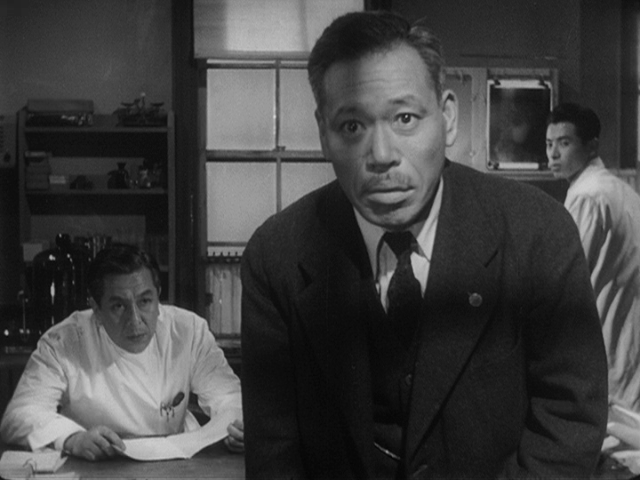
Ikiru
from my 1st Ebert’s Great Movies Marathon, part 2 of 13

Data
Title: Ikiru
Year: 1952 (Japan); 1956 (US)
Length: 143 minutes
Director: Akira Kurosawa
Writers: Akira Kurosawa, Shinobu Hashimoto & Hideo Oguni
Starring: Takashi Shimura
With: Shin'ichi Himori, Haruo Tanaka, Minoru Chiaki, Miki Odagiri, Bokuzen Hidari, Minosuke Yamada, Kamatari Fujiwara, Makoto Kobori, Nobuo Kaneko, Nobuo Nakamura, Atsushi Watanabe, Isao Kimura, Masao Shimizu, Yûnosuke Itô
Music: Fumio Hayasaka (and non-original music)
Cinematography: Asakazu Nakai
Editing: Kôichi Iwashita
I saw it: on video a couple times, most recently a few days ago (rented from Netflix)
Synopsis: a man wants to learn to live when he finds out he’s dying
My reaction
Concept: It's a cliche, but every cliche needs at least one great movie for the others to copy.
Story:
Characters:
Dialog: There's probably something lost in translation.
Pacing: Not exactly boring, but it's very long and feels longer.
Cinematography:
Special effects/design: I'm taking some points off for poor video and sound quality. I would never guess from watching it that it was shot as late as the 50s.
Acting: Over-the-top, but very effective.
Music:
Subjective Rating: 6/10 (Okay,). Well made and depressing.
Objective Rating (Average):
And, what's Ebert got to say?
- "...one of the greatest closing shots in the cinema." Um, no.
- "[Kurosawa] makes us not witnesses to Watanabe's decision, but evengelists for it. I think this is one of the few movies that might actually be able to inspire someone to lead his or her life a little differently." Sure, maybe if you're a useless bureaucrat who can't be arsed to clean up a neighborhood sewage dump. On the other hand, if you're someone who's bothering to watch a Japanese art film, you've probably got enough of a brain to realize that being habitually miserable is a bad decision.
- "I saw Ikiru first in 1960 or 1961... I sat enveloped in the story of Watanabe for two and a half hours... Over the years I have seen Ikiru every five years or so, and each time it has moved me and made me think." And here we see why Ikiru, of all movies, is the second entry to Ebert's Great Movies. Ebert's making a statement of purpose by choosing it second - that he's not pretending to be objective. His essay includes a laundry list of classics made by Kurosawa; this is not one of them. It's great, yes, but it is clearly not meant to be seen as one of a handful of Best Movies Ever; if that were the point, one of those other, much better movies would have been chosen first. Instead we get... a movie he likes, that's important to him, personally, and that he feels like writing an essay about.
[update of a previous post - original is here]
Data
Title: Ikiru
Year: 1952 (Japan); 1956 (US)
Length: 143 minutes
Director: Akira Kurosawa
Writers: Akira Kurosawa, Shinobu Hashimoto & Hideo Oguni
Starring: Takashi Shimura
With: Shin'ichi Himori, Haruo Tanaka, Minoru Chiaki, Miki Odagiri, Bokuzen Hidari, Minosuke Yamada, Kamatari Fujiwara, Makoto Kobori, Nobuo Kaneko, Nobuo Nakamura, Atsushi Watanabe, Isao Kimura, Masao Shimizu, Yûnosuke Itô
Music: Fumio Hayasaka (and non-original music)
Cinematography: Asakazu Nakai
Editing: Kôichi Iwashita
I saw it: on video a couple times, most recently a few days ago (rented from Netflix)
Synopsis: a man wants to learn to live when he finds out he’s dying
My reaction
Concept:
It's a cliche, but every cliche needs at least one great movie for the others to copy.Story:
Characters:
Dialog:
There's probably something lost in translation.Pacing:
Not exactly boring, but it's very long and feels longer.Cinematography:
Special effects/design:
I'm taking some points off for poor video and sound quality. I would never guess from watching it that it was shot as late as the 50s.Acting:
Over-the-top, but very effective.Music:
Subjective Rating: 6/10 (Okay,
). Well made and depressing.Objective Rating (Average):
And, what's Ebert got to say?
- "...one of the greatest closing shots in the cinema." Um, no.
- "[Kurosawa] makes us not witnesses to Watanabe's decision, but evengelists for it. I think this is one of the few movies that might actually be able to inspire someone to lead his or her life a little differently." Sure, maybe if you're a useless bureaucrat who can't be arsed to clean up a neighborhood sewage dump. On the other hand, if you're someone who's bothering to watch a Japanese art film, you've probably got enough of a brain to realize that being habitually miserable is a bad decision.
- "I saw Ikiru first in 1960 or 1961... I sat enveloped in the story of Watanabe for two and a half hours... Over the years I have seen Ikiru every five years or so, and each time it has moved me and made me think." And here we see why Ikiru, of all movies, is the second entry to Ebert's Great Movies. Ebert's making a statement of purpose by choosing it second - that he's not pretending to be objective. His essay includes a laundry list of classics made by Kurosawa; this is not one of them. It's great, yes, but it is clearly not meant to be seen as one of a handful of Best Movies Ever; if that were the point, one of those other, much better movies would have been chosen first. Instead we get... a movie he likes, that's important to him, personally, and that he feels like writing an essay about.
[update of a previous post - original is here]
August 24, 2011
Casablanca
from my 1st Ebert's Great Movies Marathon, part 1 of 13

Data
Title: Casablanca
Year: 1942
Length: 102 minutes
Director: Michael Curtiz
Writers: Julius J. Epstein, Philip G. Epstein & Howard Koch, based on a play by Murray Burnett & Joan Alison
Starring: Humphrey Bogart, Ingrid Bergman
With: Paul Henreid, Claude Rains, Conrad Veidt, Sydney Greenstreet, Peter Lorre, S.Z. Sakall, Madeleine Lebeau, Dooley Wilson, Joy Page, John Qualen, Leonid Kinskey, Curt Bois
Music: Max Steiner (and non-original music)
Cinematography: Arthur Edeson
Editing: Owen Marks
Oscars: won (in 1944) for Best Picture, Best Director and Best Adapted Screenplay; nominated for Best Actor (Bogart), Best Supporting Actor (Rains), Best Cinematography (black-and-white), Best Score (dramatic or comedy) and Best Editing
I saw it: on video many times, most recently a couple days ago (have on DVD)
Synopsis: a wealthy, influential rogue in WWII Morocco refuses to take sides

My reaction
Concept:
Story:
Characters:
Dialog:
Pacing:
Cinematography:
Special effects/design:
Acting: Bergman is great. The rest are too perfectly cast to not be good.
Music:
Subjective Rating: 9/10 (One of my favorites, [edit: 5/4]). It’s not possible to like movies and not love Casablanca. It just can’t be done.
Objective Rating (Average): [edit: 3.9/4 (Great)]
And, what's Ebert got to say?
- "...who sacrifice love for a higher purpose. This is immensely appealing; the viewer is not only able to imagine winning the love of Humphrey Bogart or Ingrid Bergman, but unselfishly renouncing it..." Maybe. I don't think so. We certainly do not see anyone win anybody's love in the movie. We do see a lot of love between Isla and Laszlo. Rick is an emotionally immature jack-hole for most of the movie. And he's smart enough to know he's been a jack-hole, and that he's not giving up anything with Ilsa apart from some sex and maybe a couple years of resentful relationship. It's helping Laszlo at all, with or without Ilsa, that involves a sacrifice.
- "The plot, a trifle to hang the emotions on..." Um... no. Just no.
- "The richness of the supporting characters. . . set the moral stage for the decisions of the major characters." Okay. But more importantly, they're interesting and entertaining in themselves.
- "...Rains as the perhaps subtly bisexual police chief..." Cute.
- "It plays like a favorite musical album; the more I know it, the more I like it." Agreed. I happened to have watched it three times in less than a year, and it still keeps getting better.

[update of a previous post - original is here]
Data
Title: Casablanca
Year: 1942
Length: 102 minutes
Director: Michael Curtiz
Writers: Julius J. Epstein, Philip G. Epstein & Howard Koch, based on a play by Murray Burnett & Joan Alison
Starring: Humphrey Bogart, Ingrid Bergman
With: Paul Henreid, Claude Rains, Conrad Veidt, Sydney Greenstreet, Peter Lorre, S.Z. Sakall, Madeleine Lebeau, Dooley Wilson, Joy Page, John Qualen, Leonid Kinskey, Curt Bois
Music: Max Steiner (and non-original music)
Cinematography: Arthur Edeson
Editing: Owen Marks
Oscars: won (in 1944) for Best Picture, Best Director and Best Adapted Screenplay; nominated for Best Actor (Bogart), Best Supporting Actor (Rains), Best Cinematography (black-and-white), Best Score (dramatic or comedy) and Best Editing
I saw it: on video many times, most recently a couple days ago (have on DVD)
Synopsis: a wealthy, influential rogue in WWII Morocco refuses to take sides
My reaction
Concept:
Story:
Characters:
Dialog:
Pacing:
Cinematography:
Special effects/design:
Acting:
Bergman is great. The rest are too perfectly cast to not be good.Music:
Subjective Rating: 9/10 (One of my favorites,
[edit: 5/4]). It’s not possible to like movies and not love Casablanca. It just can’t be done.Objective Rating (Average):
[edit: 3.9/4 (Great)]And, what's Ebert got to say?
- "...who sacrifice love for a higher purpose. This is immensely appealing; the viewer is not only able to imagine winning the love of Humphrey Bogart or Ingrid Bergman, but unselfishly renouncing it..." Maybe. I don't think so. We certainly do not see anyone win anybody's love in the movie. We do see a lot of love between Isla and Laszlo. Rick is an emotionally immature jack-hole for most of the movie. And he's smart enough to know he's been a jack-hole, and that he's not giving up anything with Ilsa apart from some sex and maybe a couple years of resentful relationship. It's helping Laszlo at all, with or without Ilsa, that involves a sacrifice.
- "The plot, a trifle to hang the emotions on..." Um... no. Just no.
- "The richness of the supporting characters. . . set the moral stage for the decisions of the major characters." Okay. But more importantly, they're interesting and entertaining in themselves.
- "...Rains as the perhaps subtly bisexual police chief..." Cute.
- "It plays like a favorite musical album; the more I know it, the more I like it." Agreed. I happened to have watched it three times in less than a year, and it still keeps getting better.
[update of a previous post - original is here]
August 23, 2011
VSM: Ebert's Great Movies, part 1
Who says I can't watch two marathons at the same time?
Moving at a reasonable pace, and assuming he keeps adding new movies to his list on a regular basis, it would take more than a decade to watch all of Roger Ebert's Great Movies. If nothing else, it's a reminder that I'll never run out of good movies to watch - by the time I'd finish watching the last of them, I wouldn't remember watching the first of them. Well. Here we go. Starting with the contents of Book I, sorted according to the articles' dates on his website: the first 13 Great Movies.
Very Slow Marathon #6 – The 1st Ebert's Great Movies Marathon
[note: You can find this list above in the Very Slow Marathons tab.]
1. Casablanca, 1942
2. Ikiru, 1952
3. Vertigo, 1958
4. A Hard Day's Night, 1964
5. Mr. Hulot's Holiday, 1953
6. The Night of the Hunter, 1955
7. The Third Man, 1949
8. The Wizard of Oz, 1939
9. La Dolce Vita, 1960
10. L'Avventura, 1960
11. The Passion of Joan of Arc, 1928
12. The Godfather, 1972
13. 2001: A Space Odyssey, 1968
Moving at a reasonable pace, and assuming he keeps adding new movies to his list on a regular basis, it would take more than a decade to watch all of Roger Ebert's Great Movies. If nothing else, it's a reminder that I'll never run out of good movies to watch - by the time I'd finish watching the last of them, I wouldn't remember watching the first of them. Well. Here we go. Starting with the contents of Book I, sorted according to the articles' dates on his website: the first 13 Great Movies.
Very Slow Marathon #6 – The 1st Ebert's Great Movies Marathon
[note: You can find this list above in the Very Slow Marathons tab.]
1. Casablanca, 1942
2. Ikiru, 1952
3. Vertigo, 1958
4. A Hard Day's Night, 1964
5. Mr. Hulot's Holiday, 1953
6. The Night of the Hunter, 1955
7. The Third Man, 1949
8. The Wizard of Oz, 1939
9. La Dolce Vita, 1960
10. L'Avventura, 1960
11. The Passion of Joan of Arc, 1928
12. The Godfather, 1972
13. 2001: A Space Odyssey, 1968
Subscribe to:
Posts (Atom)